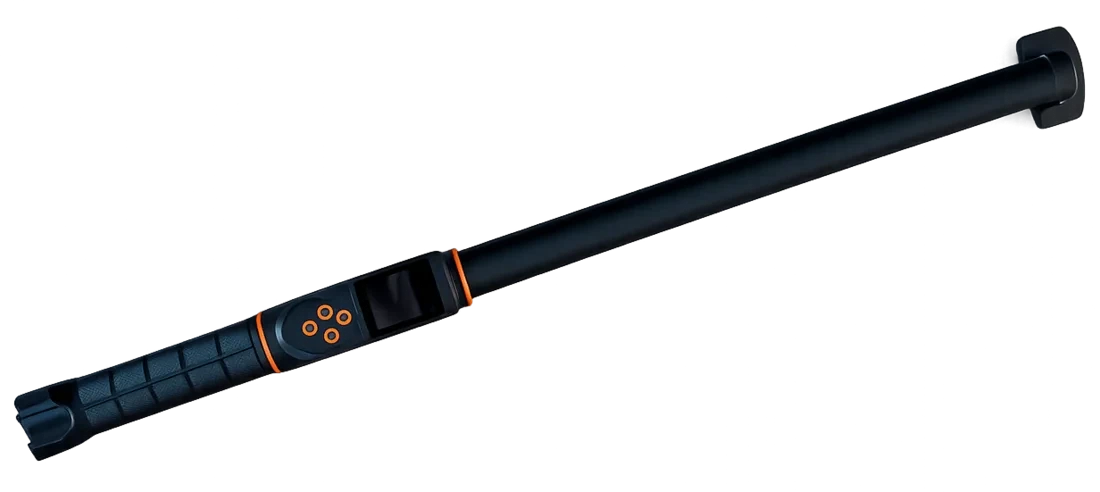
Electronic Identification – EID
Animal identification has historically relied on visible methods including printed ear tags and other physical identifiers.
RFID adds an electronic identity that can be captured by a compatible reader without relying solely on an operator visually reading and manually entering an identification number.
Once captured, the Animal ID can be transferred into connected software or systems for recording, management or traceability purposes.
Practical Electronic Identification
RFID can provide practical advantages in animal identification, including:
unique electronic identification of an individual animal;
faster capture of an Animal ID;
reduced reliance on visually reading and manually entering identification numbers;
transfer of identification data into local or cloud-based systems;
support for animal-management and traceability processes; and
in suitable systems, improved separation between the operator and the animal, i.e. safer handling.
The actual benefits depend on the RFID technology being used, the handling environment, reader infrastructure and the requirements of the application.
LF RFID – 134.2 kHz
134.2 kHz LF RFID has a long-established position within electronic animal identification.
Its early adoption resulted in established standards, reader infrastructure and widespread industry familiarity.
Common LF animal-identification air-interface / signalling schemes include:
FDX-B – Full Duplex B
HDX – Half Duplex
In everyday animal-RFID terminology these are often referred to as protocols, although technically they form part of the air-interface and signalling schemes defined by the applicable standard.
LF animal-identification systems commonly operate over relatively short reading distances and, in the animal-ID context described here, are used to read one Animal ID tag at a time.
Why Standards Matter
Animal identification does not stop at the farm gate – or necessarily at a national border.
An animal or identification record originating in one country may need to be recognised and interpreted by readers and systems in another.
International standards provide a common framework so that compatible tags, readers and systems can interpret identification information consistently.
For established LF animal identification, important standards include:
ISO 11784
ISO 11785
ICAR also has an established role in Animal RFID by allocating globally unique numbers for encoding purposes, primarily where country codes are not used or are out of scope.
This common framework helps electronic identification operate across farms, markets, transport, processing, authorities and other parts of the animal supply chain.
The Developing Role of UHF
UHF RFID provides a different set of capabilities from established LF animal identification.
In suitable livestock applications, UHF can provide:
longer practical reading distances;
faster data capture;
anti-collision capability for identifying multiple animals;
greater separation between the operator and the animal, i.e. safer handling;
potential alignment with UHF infrastructure already used elsewhere in modern supply chains.
UHF animal-identification standards and approaches continue to develop alongside the established LF framework.
UHF animal-ID standards and formats including:
ISO 6881
USDA interim
Legacy Scottish formats
HYKK’s view is that LF will remain an important part of animal identification and is unlikely to be replaced entirely. At the same time, UHF should be fully standardised and formally recognised globally as an official RFID frequency for the animal industry.
The objective should be to give the industry both options within a recognised standards framework, allowing farmers, supply-chain operators, technology providers and competent authorities to adopt the technology – or combination of technologies – that best suits their requirements. Adoption can then be driven by practical value rather than by unnecessarily restricting the industry to a single frequency.
Combining Established LF with UHF Capability
Dual-frequency animal-identification tags incorporating both LF and UHF technologies are available.
These can provide a practical bridge between established and developing systems by remaining compatible with existing LF identification infrastructure while also enabling the additional capabilities of UHF.
The same animal can therefore continue to be identified using established LF infrastructure where required, while UHF can provide advantages such as faster data capture, multi-tag reading and greater operator separation in suitable handling environments.
Dual-frequency tags can combine the established compatibility of LF with the speed and handling advantages available from modern UHF systems.
Not Every Animal RFID Application is the Same
There is an important distinction between RFID used for animal management and RFID used for official identification and traceability.
For management purposes, a farm or business may select technology and numbering arrangements appropriate to its own operational requirements.
Official animal identification is different. It depends on common standards, recognition and regulatory requirements so that identification data can be understood consistently throughout the relevant traceability system.
A technology can therefore be technically suitable for identifying an animal while still requiring appropriate standardisation or official recognition before it can be used for formal traceability purposes.
Technology Evolves With the Industry
The technology used for electronic animal identification does not remain static.
LF became established because it provided a practical, standardised solution when electronic animal identification was being developed. That created substantial infrastructure, standards and industry familiarity.
As UHF technology and associated standards have developed, additional capabilities have become available.
This does not mean that established LF systems suddenly become obsolete. Changes within animal EID are influenced by existing infrastructure, standards, regulation, investment and operational requirements.
The important point is that animal EID technology can evolve as the needs, standards and capabilities of the industry evolve.
Different Frequencies Require Compatible Readers
LF and UHF use different RFID frequencies.
An LF-only reader cannot communicate with a UHF tag, while a UHF-only reader cannot communicate with an LF tag.
Where animals using both technologies may be encountered, the reading infrastructure therefore needs to support the relevant frequency or frequencies.
This is particularly relevant during periods where established and newer EID technologies coexist.